
How Long Do Dental Implants Last?
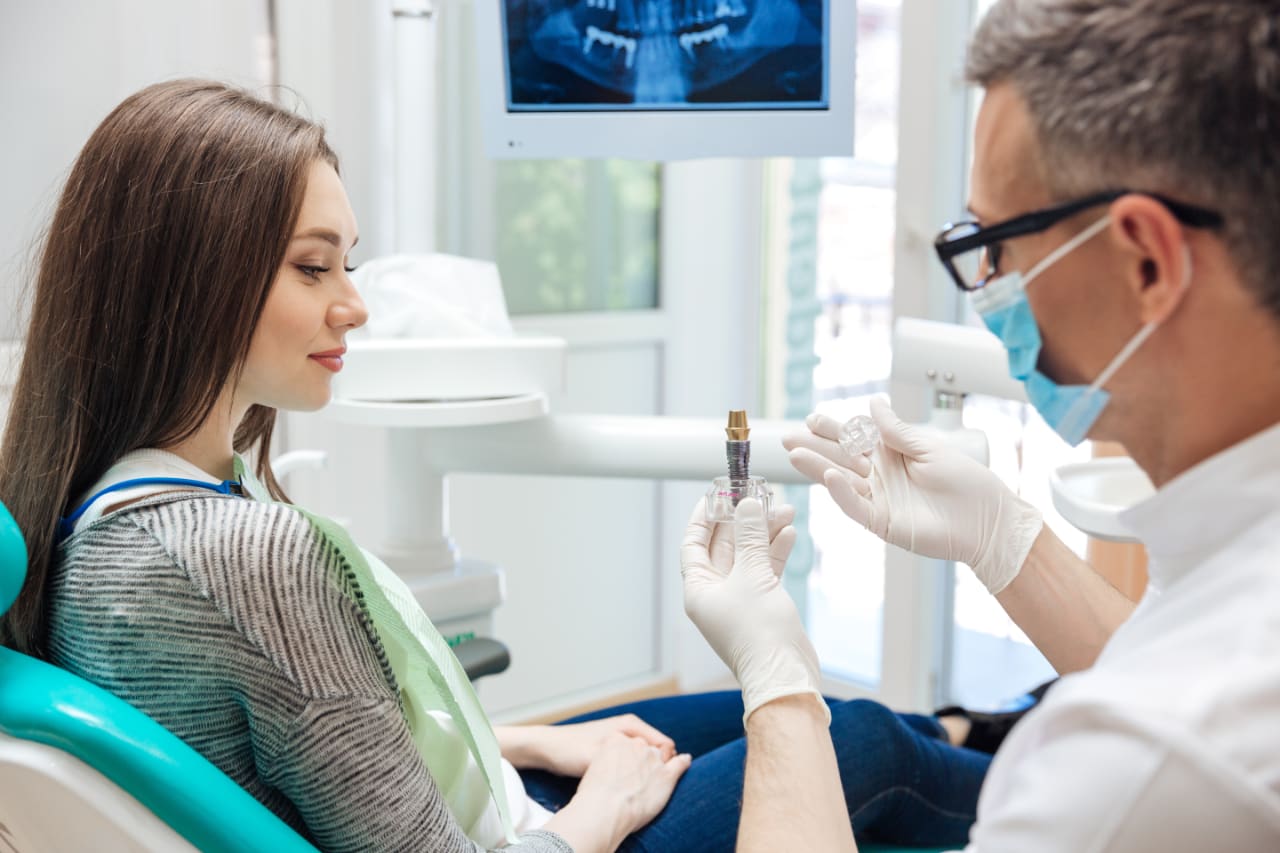
With proper care, dental implants can last a lifetime — making them the longest-lasting tooth-replacement option available. The implant post itself, which fuses with the jawbone, is designed to be permanent, while the crown attached to it typically lasts 10 to 15 years before it may need replacement. Understanding what affects implant longevity can help you protect your investment and enjoy a healthy, functional smile for decades to come.
Why Dental Implants Last So Long
A dental implant has three parts: a titanium post that acts as an artificial tooth root, an abutment that connects to it, and a crown that sits on top. What makes implants uniquely durable is osseointegration — the process by which the titanium post fuses directly with your jawbone, becoming a permanent part of your mouth. Unlike bridges or dentures, which rest on top of the gums or rely on neighboring teeth, an implant is anchored in the bone itself, giving it unmatched stability and longevity.
Implant Post vs. Crown: Two Different Lifespans
It helps to think of an implant in two parts, because each has a different expected lifespan:
- The implant post: With successful osseointegration and good care, the titanium post can last a lifetime. It's designed to be a permanent replacement for the tooth root.
- The crown: The visible crown endures daily biting and chewing, so it typically lasts 10 to 15 years before normal wear may call for replacement. Replacing a crown is far simpler than replacing the implant itself.
This is why implants are considered such a strong long-term value: even if the crown eventually needs updating, the foundation remains in place.
What Affects How Long Implants Last
While implants are built to last, several factors influence their lifespan:
- Oral hygiene — bacteria around an implant can cause peri-implantitis, an infection that threatens the implant. Daily brushing and flossing are essential
- Regular dental visits — professional monitoring catches small issues before they become serious
- Location in the mouth — implants toward the back endure more chewing force and may wear slightly faster
- Teeth grinding (bruxism) — excessive force from grinding can stress an implant and its crown
- Overall health — conditions like uncontrolled diabetes or smoking can affect healing and long-term success
- The skill of placement — precise, well-planned placement by an experienced dentist sets the implant up for lasting success
How to Make Your Dental Implants Last a Lifetime
The good news is that most of what determines implant longevity is within your control. To give your implants the best chance of lasting a lifetime: brush twice daily and floss around the implant, keep up with regular dental cleanings and exams, wear a custom nightguard if you grind your teeth, avoid chewing hard objects like ice, and don't smoke. These simple habits protect both the implant and the gum and bone that support it.
Do Implant-Supported Restorations Last as Long?
Implants can support more than a single crown — they can also anchor bridges and dentures. All-on-4 dental implants, which replace a full arch of teeth on just four implants, offer the same long-lasting foundation, though the fixed bridge or denture on top may need maintenance or replacement over time. In all cases, the implants themselves are designed to be a permanent solution when properly cared for.
What If There Isn't Enough Bone for an Implant?
Successful, long-lasting implants require adequate jawbone to anchor into. If you've lost bone density due to missing teeth or gum disease, that doesn't necessarily rule out implants. A bone graft can rebuild the bone needed to support an implant securely. Using advanced digital imaging, Dr. Byron Desbordes can evaluate your bone structure and determine whether grafting is needed to set your implant up for long-term success.
Are Implants Worth It?
When you consider that dental implants can last a lifetime — compared to bridges (which often last 10 to 15 years) or dentures (which may need periodic replacement and adjustment) — they frequently offer the best long-term value of any tooth-replacement option. Add in the fact that implants prevent the jawbone loss that follows missing teeth, and for many patients the investment pays off in both durability and overall oral health.
Talk to a Baltimore, MD Dentist About Dental Implants
Dr. Byron Desbordes, DDS provides long-lasting dental implants for patients across Baltimore, Windsor Mill, Woodlawn, Catonsville, and Ellicott City. With more than 20 years of restorative experience, Dr. Desbordes can help you determine whether implants are right for you and design a solution built to last.
Schedule a consultation at the office of Dr. Byron Desbordes, DDS by calling (410) 277-0138 today.