
How Long Do Dental Crowns Last?
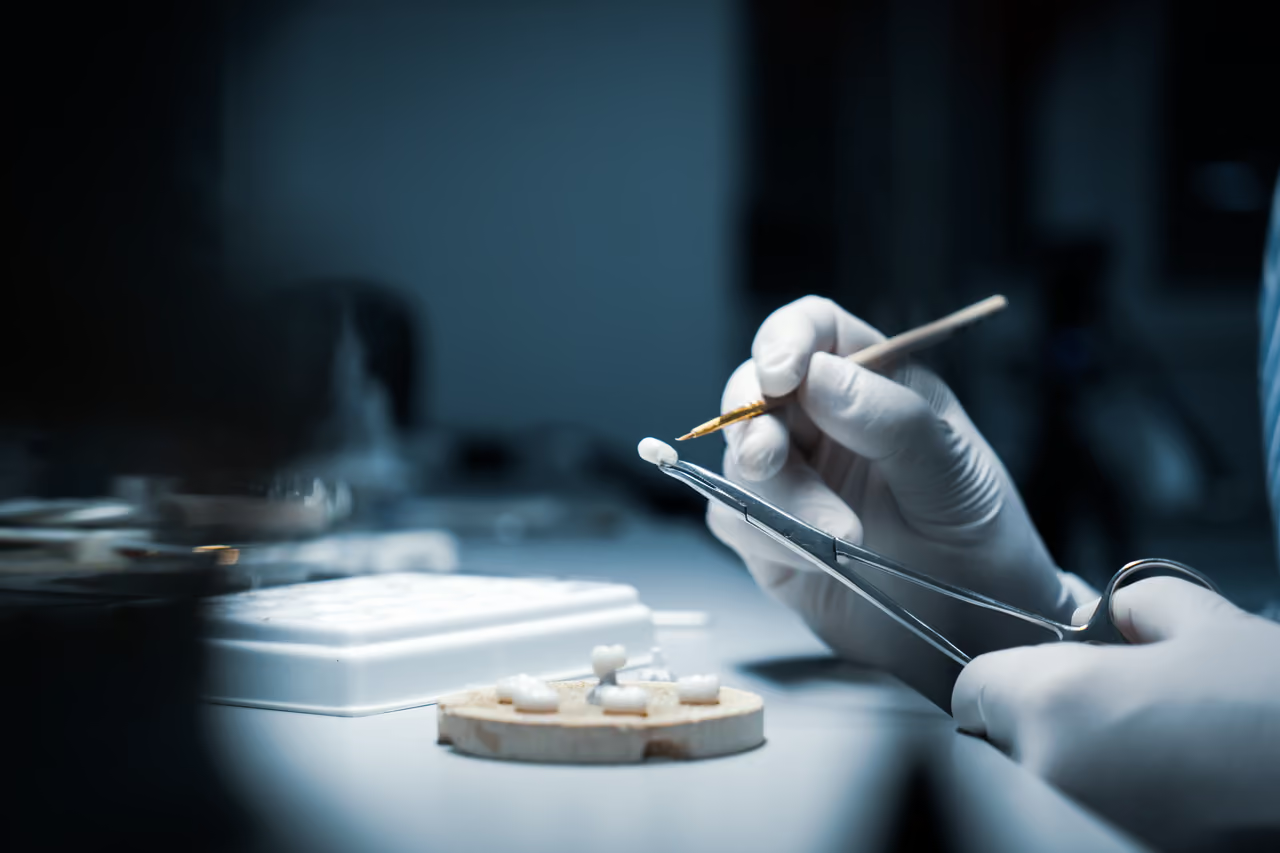
Most dental crowns last between 10 and 15 years, though many can last 20 years or longer with good care. The actual lifespan depends on the material the crown is made from, where it sits in your mouth, your oral hygiene habits, and everyday factors like whether you grind your teeth. Understanding what influences a crown's longevity can help you protect your investment and get the most out of your restoration.
What Is a Dental Crown?
A dental crown is a custom-made cap that covers a damaged, decayed, or weakened tooth to restore its shape, size, strength, and appearance. Crowns are used in a wide range of situations: to protect a tooth after a root canal, to restore a tooth that's too damaged for a filling, to anchor a dental bridge, or to cover a dental implant. Because the crown fully encases the visible portion of the tooth, it both strengthens the underlying structure and improves the tooth's appearance.
Average Lifespan by Crown Material
Not all crowns are created equal, and the material has a significant impact on how long the crown will last. Common crown materials include:
- Porcelain-fused-to-metal (PFM) crowns — typically last 10 to 15 years, combining strength with a natural appearance
- All-porcelain or all-ceramic crowns — usually last 10 to 15 years and offer the most natural, lifelike appearance, making them popular for front teeth
- Zirconia crowns — highly durable and can last 15 to 20 years or more, well-suited to back teeth that endure heavy chewing forces
- Gold and metal alloy crowns — among the longest-lasting, often 20 years or more, though less popular today for cosmetic reasons
Dr. Byron Desbordes helps each patient choose the material that best balances durability, appearance, and budget for the specific tooth being restored.
What Affects How Long a Crown Lasts
Two patients can receive identical crowns and see very different lifespans depending on a range of factors:
- Oral hygiene — crowns don't decay, but the natural tooth beneath the crown can. Poor hygiene at the gumline is one of the most common reasons crowns fail early
- Location in the mouth — crowns on molars endure far more chewing force than crowns on front teeth and may wear faster
- Teeth grinding (bruxism) — clenching and grinding place enormous stress on crowns and can crack or loosen them over time
- Diet and habits — chewing ice, hard candy, or using teeth as tools can damage even a well-made crown
- The quality of the original fit — a precisely fitted crown seals out bacteria and lasts longer than a poorly fitted one
Signs Your Crown May Need to Be Replaced
Crowns don't last forever, and knowing the warning signs can help you address a problem before it becomes serious. Watch for:
- Pain, sensitivity, or discomfort around the crowned tooth
- A visible crack, chip, or worn area on the crown
- A loose crown or one that feels like it shifts when you bite
- A dark line at the gumline, which can indicate the crown margin is exposed
- Gum recession or inflammation around the base of the crown
If you notice any of these signs, it's worth scheduling an evaluation. Catching a failing crown early often means a simpler, less expensive fix.
How to Make Your Dental Crown Last Longer
The good news is that most of what determines a crown's lifespan is within your control. To get the maximum life out of your crown: brush twice a day and floss daily, paying special attention to the gumline around the crown; avoid chewing hard objects like ice and hard candy; wear a custom nightguard if you grind your teeth; and keep up with regular dental cleanings and exams so your dentist can monitor the crown and the tooth beneath it. These simple habits can add years to the life of your restoration.
What to Expect When Getting a Crown in Baltimore
Getting a crown typically involves preparing the tooth, taking a precise impression, and placing the final crown once it's fabricated. At the office of Dr. Byron Desbordes, DDS, we use advanced digital imaging to ensure an accurate fit and a natural-looking result. A well-fitted crown not only lasts longer but also feels comfortable and blends seamlessly with your surrounding teeth.
Talk to a Baltimore, MD Dentist About Dental Crowns
Dr. Byron Desbordes, DDS provides durable, natural-looking dental crowns for patients across Baltimore, Windsor Mill, Woodlawn, Catonsville, and Ellicott City. Whether you need a new crown or think an existing one may need replacing, our team can help you protect your smile for years to come.
Schedule a consultation at the office of Dr. Byron Desbordes, DDS by calling (410) 277-0138 today.